For generations, amla, reetha, and shikakai have been closely associated with traditional hair-care practices across Pakistan and South Asia. Long before modern shampoos and conditioners became everyday products, these botanical ingredients were incorporated into homemade cleansing preparations, hair oils, powders, and other traditional routines.
Today, they continue to appear in many botanical shampoos, herbal hair oils, and hair-care formulations.
At Shabbir Sons Naturals, we appreciate the connection between traditional ingredients and modern personal care. In this guide, we'll look at what amla, reetha, and shikakai are, how they have traditionally been used, and practical considerations when incorporating botanical products into your hair-care routine.
Note: This article discusses traditional and cosmetic uses for educational purposes. It is not medical advice or a claim that these ingredients treat hair loss or scalp conditions.
What Are Amla, Reetha & Shikakai?
Although these three ingredients are frequently mentioned together, they come from different plants and traditionally serve different purposes.
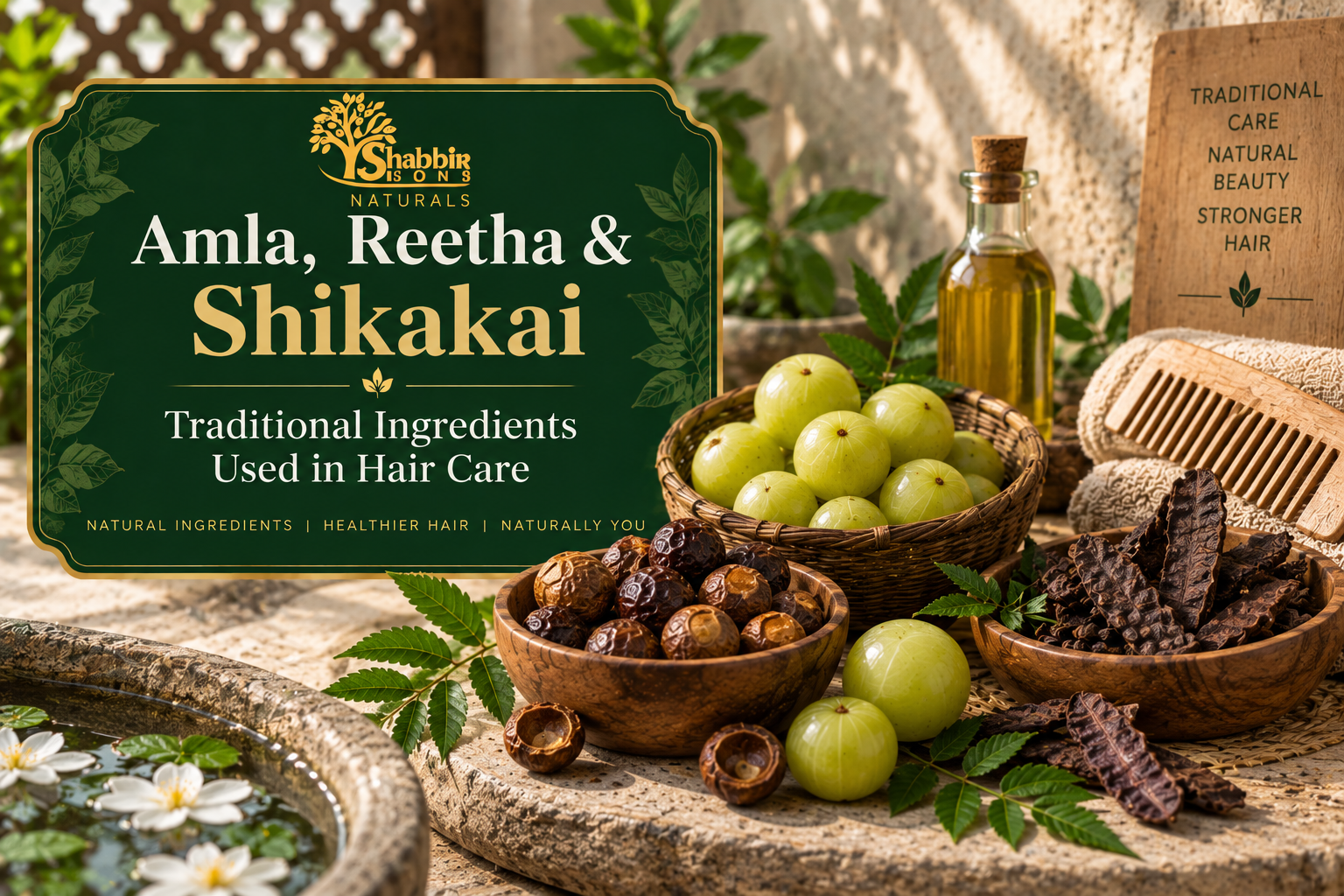
Amla is a fruit, reetha is the fruit of soapnut trees, and shikakai comes from the pods of a climbing shrub.
Their different properties are why they have historically been combined in various traditional hair preparations.
1. Amla – Indian Gooseberry
Amla, also known as Indian gooseberry, is a small green fruit widely known throughout South Asia.
It has a long history of use in traditional beauty and hair-care preparations and is commonly found today in:
- Herbal hair oils
- Hair masks
- Botanical shampoos
- Herbal powders
- Conditioners
- Scalp-care products
Traditional Hair-Care Use
Amla has traditionally been dried and powdered or infused into oils before being applied as part of a hair-care routine.
Modern products may instead use amla extracts or other processed forms in professionally formulated shampoos and oils.
Amla-containing products are often used by people looking for a more botanical approach to everyday hair care.
2. Reetha – Soapnut
Reetha, commonly called soapnut, is particularly interesting because its fruit contains naturally occurring compounds known as saponins.
When reetha is mixed or agitated with water, these compounds can produce a soap-like effect, which explains its long-standing association with traditional cleansing.
Traditional Hair-Care Use
Reetha has historically been used in preparations intended to cleanse the hair and scalp.
Today, you may find it included in:
- Herbal shampoos
- Botanical cleansing products
- Hair powders
- Traditional herbal preparations
Modern shampoo formulations containing reetha may also include other cleansing, conditioning, preservation, and cosmetic ingredients to create a stable and convenient product.
3. Shikakai
Shikakai is another botanical ingredient traditionally associated with hair cleansing in South Asia.
The pods are typically dried before being processed into powder or extracts for cosmetic preparations.
Traditional Hair-Care Use
Shikakai has traditionally been incorporated into hair-cleansing mixtures and is frequently paired with amla and reetha.
Today it can be found in:
- Herbal shampoos
- Hair powders
- Botanical cleansers
- Hair masks
- Traditional hair preparations
Its long history in regional hair-care traditions is one reason it remains a recognizable ingredient in botanical products.
Why Are These Three Ingredients Often Combined?
Amla, reetha, and shikakai became a familiar combination because each has traditionally played a somewhat different role in hair-care preparations.
Amla is strongly associated with traditional hair oils and conditioning preparations.
Reetha is particularly associated with cleansing because of its naturally occurring saponins.
Shikakai also has a long history of use in traditional hair-cleansing preparations.
Together, they became a recognizable trio in South Asian botanical hair care.
Traditional Ingredients in Modern Hair Products
You don't necessarily need to prepare raw herbs at home to include these botanicals in your routine.
Modern cosmetic products can incorporate botanical ingredients into ready-to-use formulations such as:
- Shampoo
- Hair oil
- Conditioner
- Hair masks
- Scalp products
A properly formulated product can also provide clear directions regarding how much to use and how long it should remain on the hair.
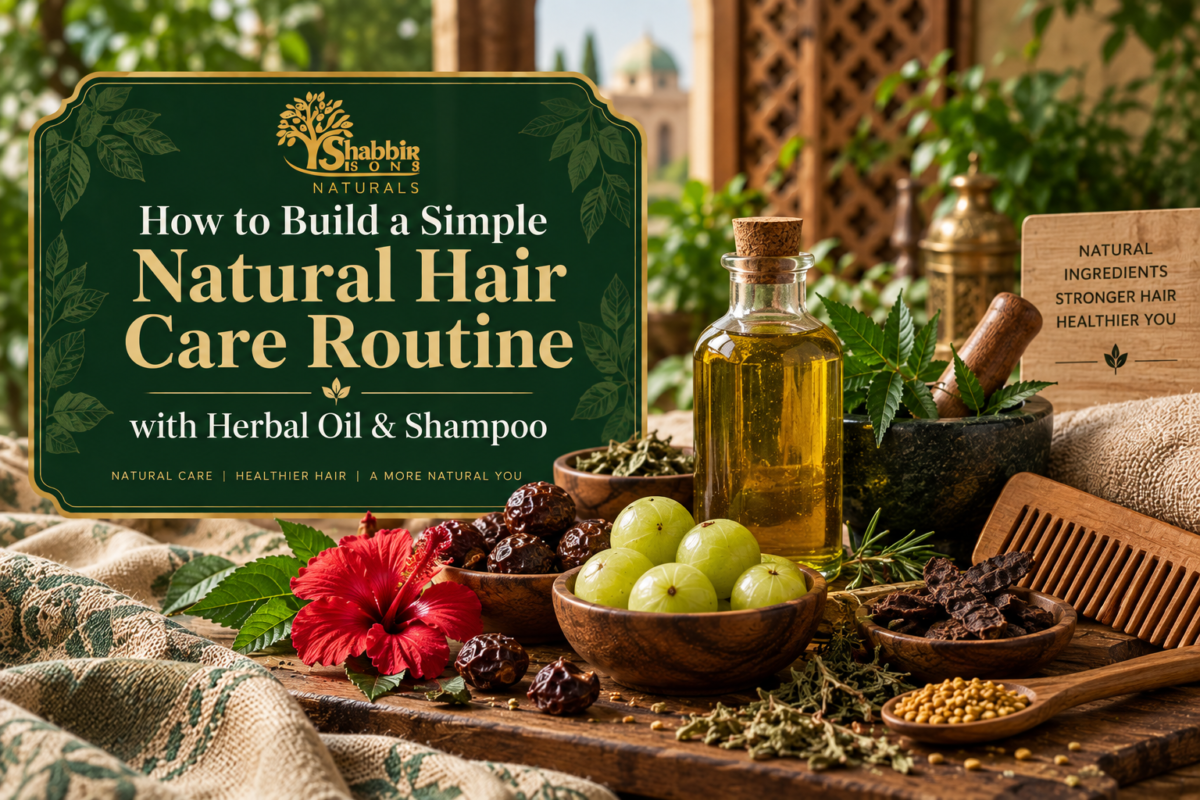
A Simple Herbal Hair-Care Routine
If you're interested in botanical hair care, keeping your routine simple can make it easier to determine what works for you.
Step 1: Hair Oiling
If oiling suits your hair and scalp, apply an appropriate amount of herbal hair oil before washing.
Massage gently using your fingertips rather than scratching with your nails.
Avoid assuming that more oil means better results. Excessive oil may simply require more shampoo to remove.
Step 2: Shampoo
Wet your hair thoroughly and apply shampoo primarily to the scalp.
Massage gently and allow the shampoo to move through the lengths as you rinse.
If you've applied a substantial amount of oil, you may occasionally need a second gentle cleanse.
Step 3: Rinse Thoroughly
Product residue can leave hair feeling heavy, so rinse thoroughly with comfortable lukewarm water.
Avoid unnecessarily hot water.
Step 4: Dry Gently
Instead of aggressively rubbing wet hair with a towel, gently squeeze or blot away excess water.
Detangle carefully and avoid unnecessary pulling.
Can You Use Raw Amla, Reetha & Shikakai at Home?
Traditional recipes using raw botanical ingredients exist, but homemade preparations require additional care.
Raw powders and concentrated preparations may:
- Irritate sensitive skin or scalp
- Enter and irritate the eyes
- Be difficult to rinse completely
- Produce inconsistent concentrations
- Cause an allergic or sensitivity reaction in some people
If you choose to experiment with raw botanical ingredients, research the particular ingredient carefully and consider patch testing appropriately.
For many people, a properly formulated commercial product is more convenient than preparing raw herbal mixtures.
How Often Should You Use Herbal Hair Products?
There is no universal schedule.
Your ideal routine depends on:
- Scalp oiliness
- Hair texture
- Hair thickness
- Exercise and sweating
- Product buildup
- Styling habits
- Climate
- How your scalp responds to the product
Some people need to wash their hair frequently, while others prefer longer intervals.
Rather than following a fixed rule, adjust your routine according to your own scalp and hair.
Natural Doesn't Automatically Mean Suitable for Everyone
Botanical ingredients can still cause irritation or allergic reactions.
Before using a new hair or scalp product, check its ingredient list and usage instructions.
Stop using a product if you experience significant:
- Burning
- Persistent itching
- Swelling
- Rash
- Redness
- Other unexpected irritation
Seek appropriate medical attention for severe reactions.
What About Hair Growth and Hair Loss?
Amla, reetha, and shikakai have strong traditional associations with hair care, but cosmetic products should not be treated as a guaranteed solution for hair loss.
Hair loss can have many possible causes, including genetics, nutritional factors, hormonal changes, medical conditions, medications, stress, and scalp disorders.
If you experience sudden hair loss, bald patches, significant thinning, scalp sores, or persistent scalp problems, consider consulting a qualified healthcare professional or dermatologist rather than relying only on cosmetic products.
How to Store Herbal Hair Products
Follow the instructions printed on the individual product, but generally:
- Keep containers tightly closed.
- Store them away from excessive heat.
- Protect them from direct sunlight when instructed.
- Avoid introducing water into dry powders.
- Use clean, dry hands or utensils.
- Do not use products beyond their indicated expiry or recommended use period.
Correct storage helps preserve the quality of the formulation.
Traditional Hair Care for Modern Routines
Amla, reetha, and shikakai represent an important part of South Asia's long tradition of botanical personal care.
You don't need an overly complicated routine to explore these ingredients. A straightforward combination of appropriate hair oiling, gentle shampooing, careful handling, and consistency can fit comfortably into modern life.
At Shabbir Sons Naturals, our goal is to connect traditional botanical inspiration with simple everyday personal-care routines.
Explore our range of herbal hair oils, botanical shampoos, natural ingredients, and traditional products to find options suitable for your routine.
Shabbir Sons Naturals — Traditional Goodness for Modern Living.